Isn’t it frustrating when you’re teaching antonyms and synonyms, and your students seem to tune out. What’s worse? When they have nothing useful to look back on when it’s time to review. If this sounds familiar, keep reading…

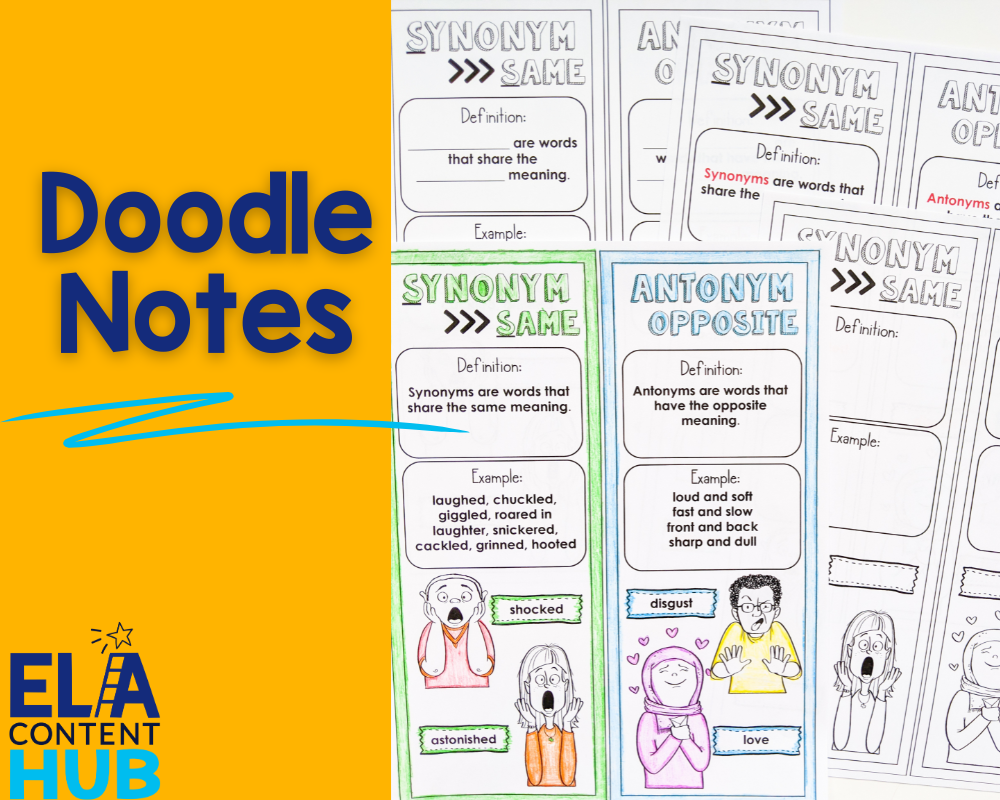
I use a different approach to keeping students interested and helping them retain the material. It’s called “doodle notes,” and it involves:
→ purposeful coloring
→ sketching and doodling
→ interactive student involvement
→ simple visual cues
This approach creates a fun, hands-on note-taking experience that helps students stay focused and better understand what they’re learning.
These note pages go beyond just copying down definitions. While working on them, students actively participate by coloring, doodling, and interacting with visuals. This makes learning antonyms and synonyms more engaging, helping them remember the material long after the lesson is over!
Synonyms and Antonyms in Middle School
In middle school, mastering synonyms and antonyms is crucial for expanding vocabulary and refining writing skills. Synonyms help students choose more precise words, while antonyms teach them how to express contrasts and deepen their understanding of meaning.
At this level, students are moving beyond basic definitions and appreciating the nuance of word choice.
However, traditional note-taking methods can often feel dry and unengaging. That’s why using creative approaches, like doodle notes, can make a big difference in how students interact with this important content.
The Advantages of Doodle Notes
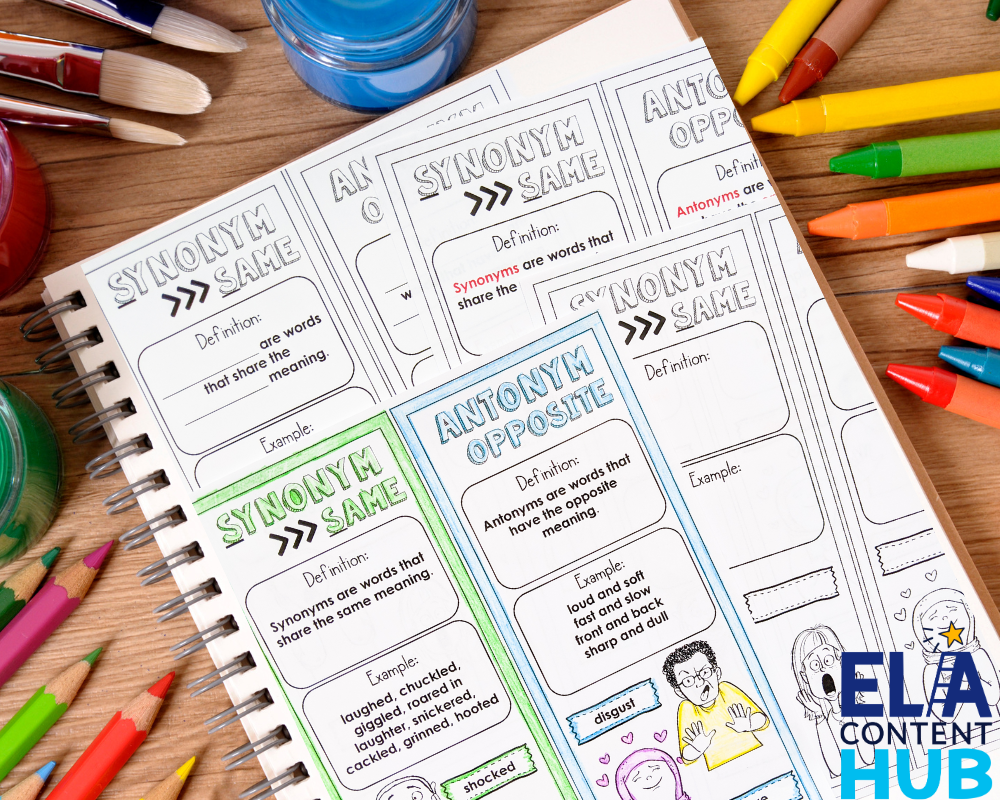
Doodle notes offer a flexible, hands-on way for students to engage with synonyms and antonyms in a way that suits their learning style. The beauty of this method is that it’s adaptable and allows students to learn at their own pace.
With three different versions of the notes available, students can choose the format that works best for them, whether they prefer a blank template, a partially filled one, or a version where they only need to add details.
Here’s how you can use doodle notes to maximize learning:
→ Give Students a Choice: Let them pick the version of the note page that fits their needs.
Some might prefer to fill in more blanks, while others feel more comfortable with a partially completed version that guides them.
→ Go at Their Pace: Students can work at their own speed, allowing for independent exploration of synonyms and antonyms or a more structured, teacher-led lesson. You can even mix it up with whole-group, small-group, or partner activities to keep things fresh.
→ Mix It Up: Doodle notes are incredibly versatile. You can use them in various formats, from whole-class lessons where everyone works together, to small groups or partner work where students share ideas. There is no one-size-fits-all way to use doodle notes—they can look completely different from one class to the next, depending on your students and classroom culture.
Some classes might be eager to work independently and explore the content on their own, while others may benefit from walking through it step by step, almost like a graphic organizer that everyone fills in together. The same page can spark different results depending on the group, so feel free to adapt the process as needed.
Tips for Using Doodle Notes Effectively
To get the most out of doodle notes, it’s helpful to keep a few strategies in mind:
→ Set a Time Limit: This helps students stay focused and prevents them from getting lost in the creative process. A clear time frame ensures they stay on task while still having fun with their notes.
→ Encourage the Use of Doodle Tools: Provide students with different tools like colored pens, markers, and highlighters to make their notes more vibrant. The act of coloring and personalizing their notes helps reinforce memory and retention.
→ Show a Sample: Before students dive in, show them an example of a completed page. This gives them a clear idea of what’s expected and how they can incorporate their own creativity without straying too far from the purpose of the lesson.
Doodle notes bring flexibility and engagement to the classroom in a way that traditional note-taking often can’t. By giving students options, encouraging creativity, and adapting lessons to fit your class, you’ll see how this strategy can help students grasp the nuances of synonyms and antonyms while staying interested and involved. To learn more about how to implement them, check out my blog post: Doodle Notes in ELA: How To Guide
Free 6th Grade Antonyms and Synonyms Doodle Notes Preview
As 6th graders dive deeper into vocabulary, understanding word relationships like antonyms and synonyms, cause/effect, part/whole, and item/category becomes essential. According to CCSS.ELA-Literacy.L.6.5.b, students should use these relationships to enhance their understanding of each word’s meaning.
I want to give you a sneak peek into my doodle notes specifically focused on antonyms and synonyms, along with other keyword relationships. These interactive doodle notes are designed to help students explore and practice these concepts in a creative, hands-on way.
Try these and see for yourself the power of doodle notes!

A Sneak Peek of What ELA Content Hub Is Really About
This is just the beginning of what the ELA Content Hub offers. Along with these engaging doodle notes, you will receive:
- Daily Language Review
- Mini-lesson
- Doodle Notes
- Activity
- Assessment
These resources are all designed to make learning grammar enjoyable and effective for both you and your students.
For further insight into the benefits of using Doodle Notes, check out this informative website: Research on Doodle Notes. It highlights the research backing these strategies, showcasing how they enhance student engagement and retention of information.
Are you ready to strengthen your students’ grasp of grammar, antonyms, and synonyms? Try two weeks of grammar for free today!